
Why You Get Ingrown Hair After Shaving and How to Prevent It
You shave carefully. You use a clean razor. You even go in the “right direction.”
And still, the bumps show up. For many people, ingrown hair after shaving is not just occasional. It shows up on the chin, along the jawline, on the neck, or even in areas like the bikini line and underarms. Sometimes it looks like small red bumps. Other times, it becomes painful, inflamed, and hard to ignore.
This is especially common for individuals with coarse or curly hair, where the hair naturally bends back toward the skin after being cut. A national survey found that 84% of women engage in some form of pubic hair grooming, with 62% reporting going completely bare at least once. That’s why in a city like New York, where grooming routines are often part of a fast-paced lifestyle, shaving becomes a regular cycle rather than an occasional habit. In clinical settings, including NYC electrolysis clinics like Limoges Beauty, this pattern is often associated with repeated follicle irritation, where hair continues to grow back into the skin after each shave.
Ingrown hair after shaving occurs when newly cut hair grows back into the skin instead of outward, leading to irritation and inflammation.
Why Shaving Causes Ingrown Hair
Shaving removes hair at the surface, but it also changes how the hair grows back. Even with proper shaving techniques, hair can grow back into the skin due to its natural texture, sharp edges after cutting, and blocked follicles.
Here’s what happens:
The razor cuts the hair very close to the skin
The tip of the hair becomes sharp
As it grows back, it can curl or re-enter the skin
Dead skin or clogged pores block its path outward
This is why ingrown hair is especially common in areas with:
Curly hair patterns
Frequent shaving
High friction (collars, tight clothing)
Razor Bumps vs Ingrown Hair
These two are often confused, but they are not exactly the same. Razor bumps are caused by irritation, while ingrown hair occurs when hair becomes trapped beneath the skin. But for clarity, here’s a clear difference:
| Condition | What It Is | Appearance | Cause |
|---|---|---|---|
| Razor Bumps | Skin irritation after shaving | Red, inflamed bumps | Friction and irritation |
| Ingrown Hair | Hair growing back into skin | Raised bump, sometimes with visible hair | Trapped hair in the follicle |
Common Shaving Mistakes That Cause Ingrown Hair
Even small mistakes can increase the chances of ingrown hair after shaving.
Most common mistakes:
Shaving too close to the skin
Using dull or unclean razors
Shaving against the direction of hair growth
Skipping proper skin preparation
Not exfoliating regularly
Each of these increases the chances of hair being cut below the skin surface or growing back incorrectly. Shaving too closely or improperly increases the likelihood of hair growing back into the skin, leading to ingrown hair.
How to Prevent Ingrown Hair After Shaving
Prevention focuses on reducing friction, avoiding blocked follicles, and allowing hair to grow outward naturally.
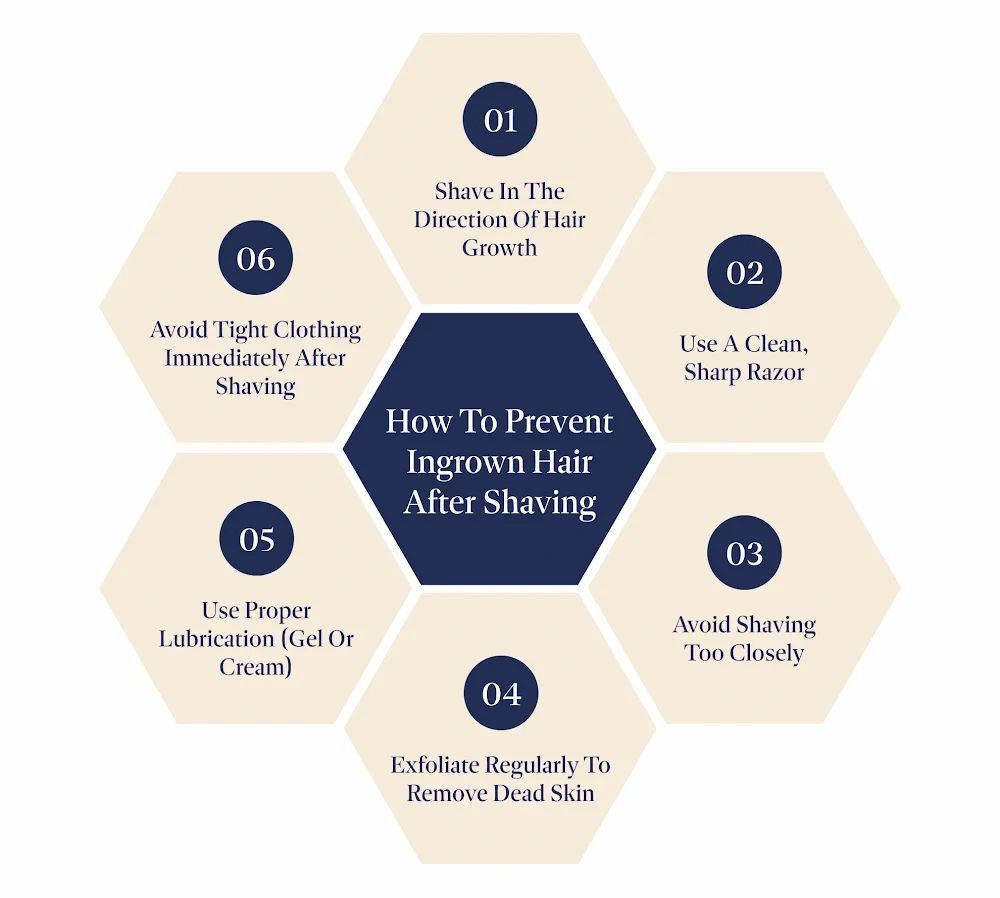
Best practices:
Shave in the direction of hair growth
Use a clean, sharp razor
Avoid shaving too closely
Exfoliate regularly to remove dead skin
Use Active Peel Pads
Use proper lubrication (like IsClinical Proheal serum)
Avoid tight clothing immediately after shaving
NYC Seasonal Tip
Winter: Focus on hydration to reduce dead skin buildup
Summer: Minimize sweat and friction in shaved areas
But to answer, how to prevent ingrown hair after shaving? Shave in the direction of hair growth, use a sharp razor, exfoliate regularly, and avoid cutting hair too close to the skin.
How to Get Rid of Ingrown Hair After Shaving
If ingrown hair has already formed, treatment should focus on calming the skin and allowing the hair to surface.
Safe ingrown hair removal methods:
Apply a warm compress
Gently exfoliate
Use anti-inflammatory treatments
Avoid picking or digging into the skin
Safe ingrown hair removal focuses on reducing inflammation and allowing the hair to emerge naturally without damaging the skin.
What If Ingrown Hair Keeps Coming Back
For many people, ingrown hair after shaving is not occasional; it’s recurring.
Why does this happen?
The same follicle keeps producing hair
Hair texture promotes inward growth
Shaving continues the cycle
Recurring ingrown hair is often caused by repeated hair regrowth from the same follicle. But this is where temporary prevention methods reach their limit.
Permanent Alternative to Shaving: Electrolysis Hair Removal
Electrolysis hair removal works differently from shaving or waxing. Instead of removing hair from the surface, it:
Targets the hair follicle directly
Destroys its ability to grow hair
Prevents future ingrown hair
Electrolysis is the only FDA-approved method for permanent hair removal. It is also the most effective permanent alternative because it destroys the follicle and prevents hair from growing back.
Why electrolysis solves shaving-related ingrown hair:
Eliminates the follicle causing the issue
Stops repeated regrowth
Works for all hair types, including curly hair
How Limoges Beauty Can Help
Limoges Beauty is an NYC electrolysis clinic specializing in permanent hair removal for facial hair, chin hair, and back hair, delivered through refined and highly targeted electrolysis treatments.
With over 15 years of experience, their licensed electrologists are known for working with complex concerns such as recurring ingrown hair, focusing on both long-term results and skin integrity.
Clinical experience includes:
Shaving bumps on the chin and jawline
Neck ingrown hair from shaving
Curly hair ingrown problem
Sensitive skin prone to irritation
In practice, individuals dealing with frequent ingrown hair after shaving often experience long-term improvement when the follicle is permanently treated. Most clients see a significant reduction after 18–24 sessions, depending on hair growth cycles.
Frequently Asked Questions
1. Why do I get ingrown hair every time I shave my chin or neck?
Ingrown hair after shaving is common in areas like the chin and neck because the hair is often coarse and grows at an angle. When shaved too closely, the hair can curl back into the skin instead of growing outward, leading to bumps and irritation.
2. How can I prevent ingrown hair after shaving in humid or dry weather like NYC?
In NYC, seasonal changes affect the skin. During winter, dryness leads to dead skin buildup that blocks follicles. In summer, sweat and friction can irritate the skin. To prevent ingrown hair, exfoliate regularly, keep the skin hydrated by using IsClinical Proheal serum, and avoid shaving too closely.
3. Why do I still get ingrown hairs even when I shave properly?
Even with proper shaving techniques, ingrown hair can still occur due to hair texture, especially in curly or coarse hair. The hair can naturally bend and grow back into the skin, particularly if follicles are blocked or irritated.
4. Is there a permanent solution for ingrown hair caused by shaving?
Yes. Electrolysis hair removal is the only FDA-approved method for permanent hair removal. It destroys the hair follicle, preventing hair from growing back and eliminating the cause of recurring ingrown hair.
5. How do I get rid of ingrown hair quickly after shaving?
Apply a warm compress to soften the skin, gently exfoliate to remove dead skin, and avoid picking or digging into the area. This helps the hair surface naturally without causing damage.
Conclusion
Ingrown hair after shaving is a common issue, but it is not something you have to keep managing indefinitely. While proper shaving techniques can reduce the risk, they do not eliminate the underlying cause. Electrolysis changes that by addressing the problem at the follicle level. Once treated, the cycle of regrowth and irritation begins to stop.
For individuals dealing with recurring ingrown hair after shaving that does not improve with technique or skin care, electrolysis offers a long-term solution by eliminating the root cause. To ensure your skin heals beautifully during this process, we often collaborate with Kristina, our expert facialist. While electrolysis clears the hair, Kristina focuses on soothing inflammation and repairing the skin's barrier, providing a comprehensive approach to a clearer complexion.
Book a consultation with Limoges Beauty, an NYC electrolysis clinic, to determine a treatment plan tailored to your hair type and skin condition.