
What Is an Ingrown Hair Cyst and How Do You Treat It?
A painful lump under the skin that doesn’t go away is rarely “just an ingrown hair.” For many people, what starts as a small bump turns into a hard, inflamed ingrown hair cyst, often tender to the touch, slow to heal, and likely to return in the same spot. This is especially common in areas like the chin, jawline, neck, bikini line, or back, where frequent shaving, waxing, or friction disrupts natural hair growth.
According to National Institute of Health data, ingrown hairs and related follicular conditions affect a significant portion of individuals who regularly remove hair, particularly those with coarse or curly hair types. When left untreated, these can progress into deeper cyst-like formations that are more difficult to manage.
In a city like New York, where grooming routines are frequent and environmental factors like winter dryness and summer humidity impact the skin, recurring ingrown hair cysts become a pattern rather than an isolated issue. In clinical settings, including NYC electrolysis clinics like Limoges Beauty, this pattern is commonly linked to repeated follicle irritation and hair regrowth that continues beneath the skin surface.
If you are dealing with a painful ingrown hair bump or a hard lump under the skin caused by an ingrown hair, understanding the condition is the first step toward treating it and preventing it from becoming a recurring issue.
What Is an Ingrown Hair Cyst
An ingrown hair cyst is a more advanced form of ingrown hair, where the hair becomes trapped deeper under the skin and may lead to inflammation or infection. This condition is part of a broader pattern explained in ingrown hair removal causes and permanent solutions, where recurring follicle blockage leads to repeated irritation and skin damage.
Unlike a surface-level ingrown hair, a cyst:
Develops deeper under the skin
Feels firm or swollen
May contain pus or fluid
It can become painful over time
An ingrown hair cyst is a closed, inflamed lump that develops when a hair grows inward and remains trapped beneath the skin, sometimes leading to infection.
Common Symptoms of an Ingrown Hair Cyst
An infected ingrown hair cyst often presents as a painful, swollen lump that does not resolve with basic skin care. Recognizing symptoms early helps prevent worsening.
Common signs include:
A hard lump under the skin
Redness and swelling
Pain or tenderness
Pus-filled or fluid-filled bump
Warmth in the affected area
Recurring inflammation in the same location
What Causes an Ingrown Hair Cyst
An ingrown hair cyst develops when a trapped hair leads to prolonged inflammation or infection.
Primary causes:
Frequent shaving, waxing, or tweezing
Curly or coarse hair growing back into the skin
Dead skin blocking the follicle
Bacterial infections
Friction from tight clothing
How to Treat an Ingrown Hair Cyst Safely
Treatment depends on severity and depth.
At-home care (mild cases):
Apply a warm compress
Gently exfoliate
Use antibacterial or soothing treatments
Avoid squeezing or picking
When to seek professional care:
Increasing pain or swelling
Visible pus or infection
No improvement over time
Repeated occurrence in the same area
Effective treatment focuses on reducing inflammation and preventing infection without damaging surrounding skin.
Infected Ingrown Hair Cyst: What Changes
When bacteria enter the follicle, the cyst can become infected.
Signs include:
Increased pain
Pus formation
Spreading redness
Warm, swollen skin
An infected ingrown hair cyst involves bacterial inflammation and may require clinical treatment.
Why Ingrown Hair Cysts Keep Coming Back
For many individuals, ingrown hair cysts are not a one-time issue.
Common reasons:
The same follicle continues producing hair
Repeated hair removal damages the skin
Hair type promotes inward growth
Temporary treatments do not address the root cause
Recurring ingrown hairs occur when the underlying follicle continues to produce hair that grows back into the skin.
Long-Term Ingrown Hair Removal Options
Temporary methods focus on managing symptoms, not eliminating the cause.
Temporary approaches:
Shaving adjustments
Exfoliation
Topical treatments
These reduce irritation but do not stop recurrence.
Permanent solution: Electrolysis Hair Removal
Electrolysis hair removal works by targeting and destroying individual hair follicles. It is the only FDA-approved method for permanent hair removal.
Why electrolysis prevents ingrown hair cysts:
Eliminates the follicle responsible for recurring cysts
Prevents hair from growing back into the skin
Breaks the cycle of inflammation and irritation
Why Choose Limoges Beauty For Your Treatment
Limoges Beauty is an NYC electrolysis clinic specializing in permanent hair removal for facial hair, chin hair, and back hair using professional electrolysis treatments.
Treatments are performed by licensed electrologists trained in advanced electrolysis techniques, with over 15 years of experience treating recurring ingrown hair and sensitive skin conditions.
Clinical expertise includes:
Ingrown facial hair removal (chin, jawline, upper lip)
Electrolysis for hormonal and persistent hair growth
Back hair removal for dense and coarse hair
Treatment for sensitive and reactive skin
In practice, recurring ingrown hair cysts are often linked to the same follicle producing hair repeatedly. Most individuals experience permanent reduction after 18–24 sessions, depending on hair growth cycles. Consistent electrolysis treatment eliminates the follicle responsible for recurring ingrown hair cysts.
How to Prevent Ingrown Hair Cysts
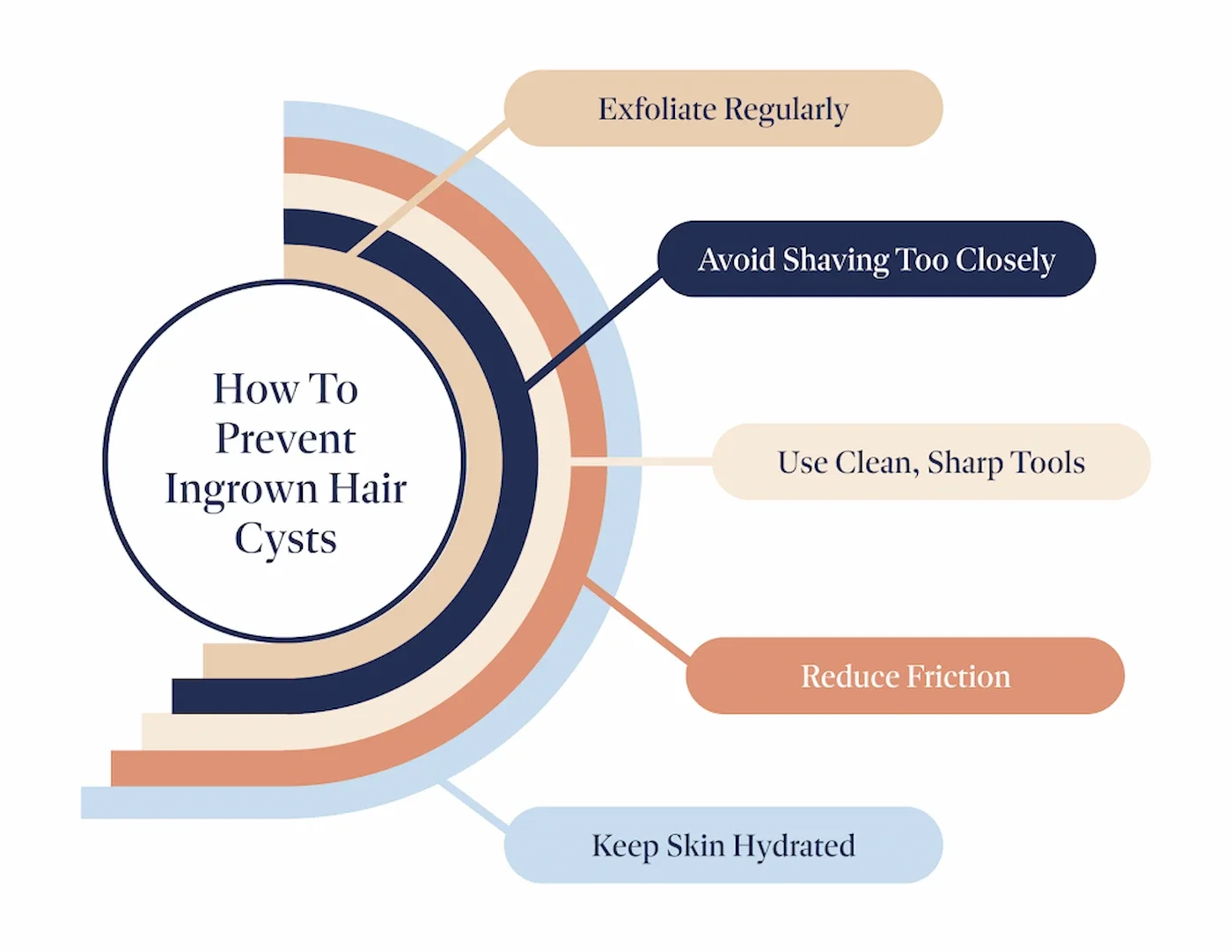
Prevention reduces risk, but permanent hair removal is required to eliminate recurring ingrown hair cysts.
Frequently Asked Questions
1. How do I treat an ingrown hair cyst in NYC?
Treatment depends on severity. Mild ingrown hair cysts can be managed with warm compresses, gentle exfoliation, and antibacterial care. However, recurring or painful cysts often require professional treatment. For long-term results, electrolysis hair removal can eliminate the follicle and prevent recurrence.
2. Can an ingrown hair cyst go away on its own?
Some mild ingrown hair cysts may improve over time, especially with proper skin care. However, deeper or infected cysts often persist or return, particularly if the same follicle continues producing hair.
3. Is electrolysis better than laser for ingrown hair cysts?
Yes. Electrolysis is more effective for ingrown hair cysts because it works on all hair types to treat each hair individually and permanently destroys the follicle. Laser hair removal reduces hair growth but may not completely eliminate the follicle.
4. Where can I get permanent ingrown hair treatment in NYC?
Permanent ingrown hair treatment is typically available at clinics specializing in electrolysis hair removal. Choosing an NYC electrolysis clinic with experienced practitioners ensures safe and effective treatment tailored to your skin and hair type.
5. What is the fastest way to reduce pain from an ingrown hair cyst?
Applying a warm compress can help reduce swelling and soften the skin. Avoid squeezing or picking the cyst, as this can worsen inflammation and increase the risk of infection.
Conclusion
An ingrown hair cyst is a deeper and more persistent form of ingrown hair that often signals an ongoing cycle of follicle blockage and inflammation. While temporary treatments can help manage symptoms, they rarely prevent recurrence. For individuals experiencing repeated cyst formation, especially in areas like the face, chin, or back, the focus shifts toward long-term solutions.
Electrolysis addresses the issue at its source. By permanently destroying the follicle, it stops the cycle of regrowth, irritation, and inflammation.
For individuals dealing with recurring ingrown hair cysts that do not resolve with topical care or routine grooming, electrolysis provides a clinically proven path to permanent hair removal.
Book a consultation with Limoges Beauty, an NYC electrolysis clinic, to evaluate a treatment plan tailored to your hair type and skin condition.