
Ingrown Hair Removal: Causes, Treatment Options, and Permanent Solutions
You shave, wax, or groom, and a few days later, the same stubborn bumps show up again. Not quite acne, not quite irritation, but something in between that never seems to fully go away. These are ingrown hairs, and for many people, they’re less of a one-time issue and more of a recurring cycle.
Ingrown hair removal involves gently releasing trapped hair, reducing inflammation, and preventing recurrence through proper skincare and hair removal methods. Long-term solutions focus on reducing hair growth at the follicle level. While exfoliation and topical treatments help manage symptoms, electrolysis hair removal is the only FDA-approved method for permanent hair removal, making it the most effective long-term solution for recurring ingrown hair.
In a fast-paced city like New York, where grooming routines are frequent and weather shifts affect skin health, managing ingrown hair becomes more than just a quick fix. At places like Limoges Beauty, this is often where conversations shift from temporary solutions to long-term approaches that actually address the root cause.
Common Ingrown Hair Problems
Ingrown hair is often dismissed as a minor issue, but in reality, it can lead to multiple skin concerns.
Common problems include:
Red, inflamed bumps
Pain and tenderness
Pus-filled lesions
Post-inflammatory hyperpigmentation
Recurrent ingrown hair in the same follicle
In areas like the chin or neck, especially with repeated shaving or tweezing, ingrown hair can become chronic. Over time, waxing and tweezing can also disrupt how the follicle sits beneath the skin, causing hair to grow back.
Ingrown hair becomes a recurring condition when the same hair follicle continues to produce hair that repeatedly grows back into the skin. For individuals dealing with ingrown facial hair removal or dense body hair, this cycle can significantly affect skin texture and appearance over time.
What Is an Ingrown Hair?
An ingrown hair is a hair that curls back or grows sideways into the skin instead of growing outward.
This typically happens when:
Hair is cut or removed and begins to grow back
The follicle opening is blocked by dead skin
Hair naturally grows in a curved or coarse pattern
Ingrown hairs commonly appear in areas where hair is frequently removed, such as:
Face and neck
Underarms
Legs
Bikini area
Back and chest
Ingrown hair becomes a recurring issue when the hair follicle continues producing hair that repeatedly grows back into the skin.
What Causes Ingrown Hair
Understanding the cause determines the right ingrown hair treatment.
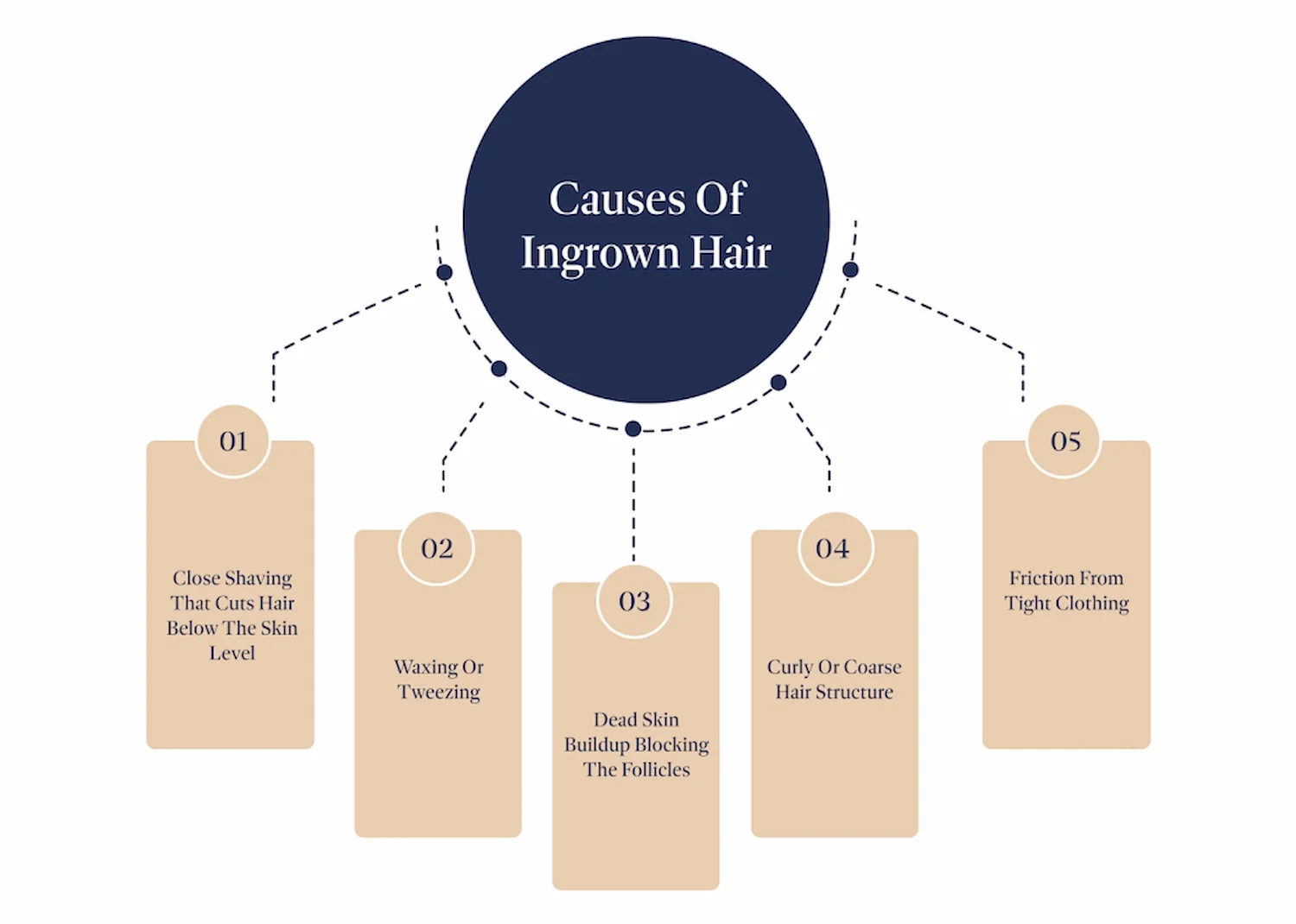
Primary causes:
Close shaving that cuts hair below the skin level
Waxing or tweezing
Dead skin buildup blocking the follicles
Curly or coarse hair structure
Friction from tight clothing
NYC seasonal impact:
Winter: Dry skin increases follicle blockage
Summer: Sweat and friction increase irritation
Ingrown hair is primarily caused by blocked follicles and hair removal methods that disrupt the natural direction of hair growth. This is why ingrown hair often worsens in areas where hair is repeatedly removed. Over time, the follicle beneath the surface can become slightly distorted, causing hair to grow in different directions, similar to tree roots spreading unevenly under the soil.
How to Remove Ingrown Hair Safely
When dealing with an active ingrown hair, the goal is to reduce inflammation and guide the hair out without damaging the skin.
Step-by-step process:
Cleanse the area gently
Apply a warm compress to soften the skin
Exfoliate lightly to remove dead skin
If the hair is visible, use a sterile tool to lift it
Apply a calming serum such as IsClinical Proheal
What to avoid:
Digging into the skin
Forcing the hair out
Using unclean tools
Safe ingrown hair removal focuses on reducing inflammation and allowing the hair to surface naturally without causing skin trauma. Improper removal can lead to scarring and pigmentation, particularly in facial areas.
Ingrown Hair Treatment Options
Different treatments target different stages of ingrown hair.
Topical treatments:
Salicylic acid (chemical exfoliation)
Glycolic acid
Retinoids
Anti-inflammatory creams
Active Peel Pads
Clinical treatments:
Professional extraction
Skin resurfacing treatments
These treatments help reduce inflammation and improve skin texture.
Limitation:They do not stop the hair from growing back, which means ingrown hair can recur.
Best Ingrown Hair Removal Method
| Method | Removes Hair | Prevents Future Ingrown Hair | Works on All Hair Types | Permanent |
|---|---|---|---|---|
| Shaving | Yes | No | Yes | No |
| Waxing | Yes | No | Mostly | No |
| Exfoliation | Helps | No | Yes | No |
| Laser Hair Removal | Reduces | Limited | Not all hair types | No |
| Electrolysis Hair Removal | Yes | Yes | Yes | Yes |
Why Electrolysis Is the Permanent Solution for Ingrown Hair
Electrolysis hair removal works by treating each hair follicle individually using a controlled electrical current. This process disables the follicle’s ability to grow hair, which directly eliminates the root cause of ingrown hair. Because ingrown hair occurs when hair grows back into the skin, removing the follicle entirely prevents that cycle from repeating.
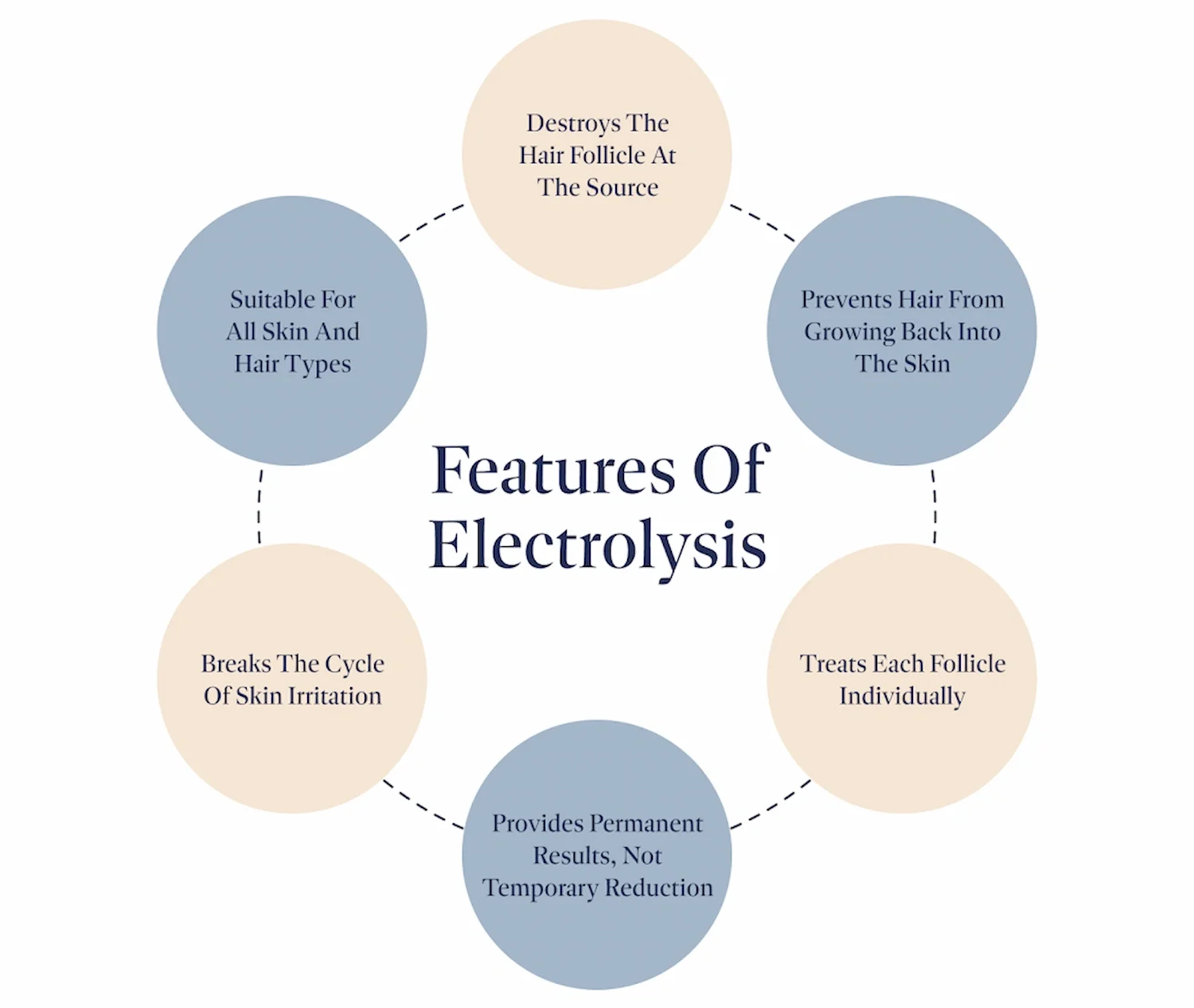
Why Electrolysis Eliminates Ingrown Hair Permanently
Destroys the Hair Follicle at the Source: Electrolysis targets the follicle itself, destroying the cells responsible for hair growth. Without an active follicle, hair cannot regrow or become trapped under the skin.
Prevents Hair from Growing Back into the Skin: Ingrown hair forms when hair re-enters the skin due to improper growth direction. Electrolysis removes the follicle completely, eliminating the possibility of sideways or trapped growth.
Treats Each Follicle Individually: Electrolysis works on a follicle-by-follicle basis, allowing precise treatment of areas prone to recurring ingrown hair, including facial hair, chin hair, and back hair.
Provides Permanent Results, Not Temporary Reduction: Unlike shaving or waxing, which cut or pull hair and often lead to regrowth issues, electrolysis offers permanent hair removal. Laser treatments may reduce hair growth, but they do not guarantee complete follicle destruction.
Breaks the Cycle of Skin Irritation: By eliminating the need for repeated shaving or waxing, electrolysis reduces ongoing irritation, inflammation, and skin damage associated with chronic ingrown hair.
Suitable for All Skin and Hair Types: Electrolysis is effective across all skin tones and hair types, including coarse, fine, light, or dark hair. This makes it a reliable solution for individuals prone to ingrown hair due to hair texture or sensitivity.
Supports Straighter, Controlled Follicle Healing: As treated follicles become inactive, the structure beneath the skin gradually simplifies. Instead of distorted or irregular growth patterns, the follicle area heals more uniformly, often described as returning to a straighter, inactive state rather than the uneven, root-like patterns seen with repeated hair removal.
So if you’re wondering, does electrolysis permanently stop ingrown hair? Then the answer is yes. Electrolysis permanently destroys the hair follicle, preventing hair from growing back into the skin and eliminating recurring ingrown hair.
Results and Expectations
With consistent electrolysis hair removal, the focus shifts from short-term fixes to long-term skin improvement.
What changes with treatment
Hair growth reduces permanently as follicles are treated
Ingrown hair stops recurring in previously affected areas
Skin becomes smoother with fewer bumps and irritation
Pigmentation caused by repeated inflammation gradually fades
What to realistically expect
Electrolysis is a progressive treatment, not an instant result.
Hair grows in cycles, so multiple sessions are required
Each session targets active follicles during the growth phase
Reduction becomes visible gradually over time
Typical treatment progression
Early stage: reduction in inflammation and fewer new ingrown hairs
Mid-stage: noticeable decrease in hair density
Later stage: long-term elimination of treated follicles
Most individuals begin to see reduced ingrown hair within a few sessions, with permanent results developing over multiple treatments aligned with the hair growth cycle.
Cost of Ingrown Hair Removal in NYC
The cost of ingrown hair treatment depends on several factors, especially when considering temporary versus permanent approaches.
What affects pricing
Treatment area (facial hair vs back hair removal)
Hair density and thickness
Frequency and number of sessions required
Typical NYC pricing range
Small areas (chin, upper lip, facial hair): $30–$100 per session
Medium to large areas (neck, back hair): priced based on time and density
Understanding cost over time
Temporary treatments such as waxing, shaving, or topical products may appear affordable initially, but they require ongoing maintenance. Electrolysis, by contrast, works toward permanent hair removal, which reduces the need for repeated spending.
While temporary treatments appear cost-effective, recurring ingrown hair often leads to higher long-term costs compared to permanent hair removal.
Limoges Beauty (NYC Electrolysis Clinic)
Limoges Beauty is an NYC electrolysis clinic specializing in permanent hair removal for facial hair, chin hair, and back hair using professional electrolysis treatments. Treatments are performed by licensed electrologists with over 15 years of experience in electrolysis hair removal and skin-focused treatment planning.
Professional expertise includes
Ingrown facial hair removal for the chin, upper lip, and jawline
Electrolysis for hormonal hair growth patterns
Back hair removal for dense or coarse hair
Treatment for sensitive, reactive, or easily irritated skin
Clinical insight from practice
In real treatment scenarios, individuals dealing with recurring ingrown hair often see:
Reduced inflammation within early sessions
Fewer ingrown hairs as follicles are treated
Permanent reduction after approximately 18–24 sessions, depending on the treatment area and hair growth cycle
Consistent electrolysis treatment gradually eliminates the follicles responsible for recurring ingrown hair, leading to long-term skin improvement.
The Permanent Hair Removal Method
To ensure consistent and predictable outcomes, treatments follow a structured, repeatable framework.
1. Assessment Phase
Hair type, density, and growth pattern are evaluated
Skin sensitivity and a history of ingrown hair are considered
2. Precision Treatment Phase
Each follicle is treated individually using electrolysis
Focus is placed on areas prone to recurring ingrown hair
3. Progressive Reduction Phase
Hair growth reduces with each session
Treated follicles stop producing hair permanently
Electrolysis requires multiple sessions because hair grows in cycles, and each follicle must be treated during its active growth phase for permanent removal. A structured electrolysis approach aligned with the hair growth cycle ensures gradual and permanent reduction of unwanted hair.
How to Prevent Ingrown Hair
While permanent hair removal addresses the root cause, preventive care helps reduce the occurrence in the short term.
Preventive steps
Exfoliate regularly to remove dead skin buildup
Avoid shaving too closely to the skin
Use clean, sharp razors, or use small cuticle scissors
Shave in the direction of hair growth
Reduce friction after hair removal
Seasonal prevention
Winter: Focus on hydration and gentle exfoliation
Summer: Minimize sweat buildup and friction from clothing
Preventive steps can reduce the risk of ingrown hair, but only permanent hair removal eliminates the root cause.
Frequently Asked Questions
1. How do I get rid of ingrown hair permanently in NYC?
The only permanent way to get rid of ingrown hair is through electrolysis hair removal. Electrolysis destroys the hair follicle, preventing it from growing back into the skin. Temporary methods like shaving, waxing, or exfoliation can reduce symptoms but do not stop recurrence.
2. Is electrolysis the best treatment for ingrown facial hair?
Yes. Electrolysis is considered the most effective treatment for ingrown facial hair because it targets and destroys individual hair follicles. This prevents repeated ingrown hair on areas like the chin, upper lip, and jawline.
3. Why do I keep getting ingrown hairs even after shaving properly?
Ingrown hairs can still occur even with proper shaving techniques due to factors like hair texture, dead skin buildup, and follicle direction. In NYC’s climate, seasonal dryness and humidity can further increase the likelihood of hair getting trapped under the skin.
4. How many electrolysis sessions are needed to stop ingrown hair?
Most individuals require between 15 to 30 electrolysis sessions, depending on the treatment area and hair growth cycle. Many people begin to notice reduced ingrown hair within the early sessions, with permanent results developing over time.
5. Can ingrown hair cause permanent skin damage or dark spots?
Yes. Repeated ingrown hair can lead to post-inflammatory hyperpigmentation, scarring, and uneven skin texture. Treating the root cause through permanent hair removal helps prevent long-term skin damage.
Conclusion
Ingrown hair is a recurring skin condition, but it is not a permanent one.
Temporary treatments can reduce irritation and improve appearance in the short term, but they do not address the underlying cause. For individuals dealing with recurring ingrown hair that does not respond to shaving, waxing, or topical treatments, electrolysis offers a medically recognized path to permanent hair removal. Instead of managing symptoms repeatedly, the focus shifts toward eliminating the source of the problem.
For those managing grooming routines, seasonal skin challenges, and persistent ingrown hair in NYC, electrolysis provides a structured and lasting solution grounded in how hair actually grows.
Book a consultation with Limoges Beauty, an NYC electrolysis clinic, to determine a treatment plan based on your hair type, skin condition, and long-term goals.